
PokéIQ 3D Lab · The real history
The Story of Pokémon
From a boy's bug hunts on the edge of Tokyo to thirty years of Pokémon: the real history of the franchise, as a film in 3D.
This is the real-world story of how Pokémon was made and how it grew. Every line says where it comes from: a dated record, something a creator said in an interview, or something the press reported. Where the story is told more than one way, the caption says so.
Dates are Japanese release dates unless the line says otherwise, and they match the Pokémon Timeline. People appear only as silhouettes, hands and the things they used; everything on screen is built in 3D for this film.
IMachida, TokyoChildhood
The Collector
The 1970s
Satoshi Tajiri grew up in Machida, on the western edge of Tokyo, among rice paddies, rivers and woods. He caught more insects than anyone, until the city grew over the fields.
Satoshi Tajiri grew up in Machida, on the western edge of Tokyo.
“There were rice paddies, rivers, forests. It was full of nature.”
In their wordsTIME · “The Ultimate Game Freak”, interview with Satoshi Tajiri (1999)
He collected insects. The other kids called him “Dr. Bug.”
ReportedTIME · “The Ultimate Game Freak”, interview with Satoshi Tajiri (1999)
He learned how they lived.
“My idea was to put a stone under a tree, because they slept during the day and like sleeping under stones.”
In their wordsTIME · “The Ultimate Game Freak”, interview with Satoshi Tajiri (1999)
“I got more insects than anyone.”
In their wordsTIME · “The Ultimate Game Freak”, interview with Satoshi Tajiri (1999)
Then the city grew.
“Then development started taking place, and as it grew, all the insects were driven away.”
In their wordsTIME · “The Ultimate Game Freak”, interview with Satoshi Tajiri (1999)
The insects were going. The feeling of finding them stayed with him.
Sources
In this chapter
 Caterpie
IITokyoThe fanzine
Game Freak
1981–1989
As a teenager Tajiri found the arcade, then wrote a handmade magazine about games called Game Freak. Ken Sugimori drew for it, and in 1989 it became a game studio with the same name.
As a teenager, Tajiri found a new kind of field: the arcade.
He wrote about games in a magazine of tips and secrets, and called it Game Freak.
“It was handwritten. I stapled the pages together.”
In their wordsTIME · “The Ultimate Game Freak”, interview with Satoshi Tajiri (1999)
An artist named Ken Sugimori found it in a fanzine shop, and began drawing for it.
Copies spread from hand to hand. One special issue sold 10,000.
In their wordsTIME · “The Ultimate Game Freak”, interview with Satoshi Tajiri (1999)
In April 1989, the magazine became a game studio, with the same name.
April 26, 1989GAME FREAK · Company profile (established April 26, 1989) (2026)
IIIGame Freak, TokyoThe idea
The Cable
1989–1990
The Game Boy came with a cable to link two together. Tajiri imagined living creatures moving back and forth along it: catch them, collect them, trade them.
In 1989, Nintendo released the Game Boy, and with it a cable to link two together.
April 21, 1989Nintendo · Company history: “Launched the handheld video game system, Game Boy” (1989)
Tajiri imagined something travelling along that wire.
“I thought of actual living organisms moving back and forth across the cable.”
In their wordsTIME · “The Ultimate Game Freak”, interview with Satoshi Tajiri (1999)
Catch them, collect them, trade them. No one could find every one alone.
“The idea I had was for information to go back and forth. It wasn't about competition.”
In their wordsTIME · “The Ultimate Game Freak”, interview with Satoshi Tajiri (1999)
Its first name was Capsule Monsters. Tsunekazu Ishihara produced it with Game Freak, and Shigeru Miyamoto gave advice.
ReportedWikipedia · Pokémon Red, Blue, and Yellow: Development (2026)
The story goes that trademark trouble changed the name more than once. It became Pocket Monsters.
As it's toldWikipedia · Pokémon Red, Blue, and Yellow: Development (2026)
IVGame Freak, TokyoThe hard road
Six Years
1990–1996
Making Pocket Monsters took nearly six years and nearly broke Game Freak. Junichi Masuda wrote the music, Atsuko Nishida designed Pikachu, Ken Sugimori led the art for all 151, and at the very end Shigeki Morimoto slipped in Mew.
It took nearly six years. Money ran so short the studio almost went broke, and five people quit.
Junichi Masuda wrote the music, and programmed it too.
Siliconera · Junichi Masuda on his composing process (and the game's own staff credits) (2017)
Atsuko Nishida designed Pikachu, dot by dot, straight onto the screen.
“I didn't draw an illustration on paper, but went straight to the computer screen and punched in the dots.”
In their wordsPokémon.com · “Creator Profile: The Creators of Pikachu” (2018)
Ken Sugimori led the art. One by one, they found their shapes. 151 of them.
Wikipedia · Pokémon Red, Blue, and Yellow: Development (2026)
And at the very end, programmer Shigeki Morimoto slipped in one more: Mew.
“We put Mew in right at the very end.”
In their wordsNintendo · Iwata Asks: Pokémon HeartGold and SoulSilver (2010)
Sources
- TIME · “Beware of the Poke Mania” (1999)
- TIME · “The Ultimate Game Freak”, interview with Satoshi Tajiri (1999)
- Siliconera · Junichi Masuda on his composing process (and the game's own staff credits) (2017)
- Pokémon.com · “Creator Profile: The Creators of Pikachu” (2018)
- Wikipedia · Pokémon Red, Blue, and Yellow: Development (2026)
- Nintendo · Iwata Asks: Pokémon HeartGold and SoulSilver (2010)
 Pikachu
 Mew
VJapanLaunch
Red and Green
February 27, 1996
Pocket Monsters Red and Green came out in Japan on February 27, 1996, late in the Game Boy's life. A magazine contest for Mew and word of mouth did the rest.
On February 27, 1996, Pocket Monsters Red and Green came out in Japan.
February 27, 1996The Pokémon Company · Corporate history (2026)
The Game Boy was nearly seven years old, and there was a feeling it had reached the end of its shelf life.
In their wordsNintendo · Iwata Asks: Pokémon HeartGold and SoulSilver (2010)
Every player began the same way: a choice between three. Bulbasaur, Charmander or Squirtle.
Then the whispers started: a hidden 151st Pokémon. A magazine contest gave Mew away, and sales took off.
In their wordsNintendo · Iwata Asks: Pokémon HeartGold and SoulSilver (2010)
It didn't explode overnight. It grew, because kids told other kids.
In their wordsNintendo · Iwata Asks: Pokémon HeartGold and SoulSilver (2010)
By October came Blue, by mail order, and that same month the Trading Card Game.
October 15, 1996October 20, 1996The Pokémon Company · Corporate history (2026)
Sources
In this chapter
 Bulbasaur
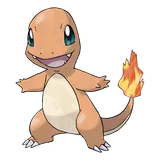 Charmander
 Squirtle
VIJapan, then the worldPhenomenon
Pokémania
1996–1999
The card game, the anime, The Pokémon Company, the first Pokémon Center and the first film, and then North America and Europe: within three years Pokémon was everywhere.
The collecting jumped off the screen and into kids' pockets: the Trading Card Game.
October 20, 1996The Pokémon Company · Corporate history (2026)
On April 1, 1997, the anime began: a boy named Ash, and a Pikachu that wouldn't get in its Poké Ball.
April 1, 1997The Pokémon Company · Corporate history (2026)
Pikachu became the face of all of it.
ReportedWikipedia · Pikachu: as the franchise's mascot (2026)
In April 1998, Nintendo, Game Freak and Creatures formed a company to look after it all. Two days later, the first Pokémon Center opened in Tokyo.
April 23, 1998April 25, 1998The Pokémon Company · Corporate history (2026)
That summer, Mewtwo Strikes Back filled cinemas.
July 18, 1998The Pokémon Company · Corporate history (2026)
In September 1998, the games reached North America, and Europe a year later.
September 28, 1998October 5, 1999The Pokémon Company · Corporate history (2026)
Gotta catch 'em all.
Wikipedia · Pokémon: the English slogan “Gotta catch 'em all” (2026)
Sources
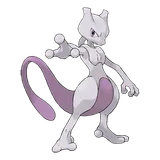 Mewtwo
VIIJohto to UnovaGenerations II–V
A Growing World
1999–2010
Gold and Silver's clock, Ruby and Sapphire's colour, Diamond and Pearl's online trading, the first World Championships, and Black and White's all-new region.
Gold and Silver added a clock. Day turned to night. Eggs hatched. And after the credits, a whole second region.
November 21, 1999Wikipedia · Pokémon Gold and Silver (2026)
Ruby and Sapphire brought the Game Boy Advance's colour, with abilities, natures and double battles.
November 21, 2002Wikipedia · Pokémon Ruby and Sapphire (2026)
Diamond and Pearl took trading online. The link cable became the whole planet.
September 28, 2006Wikipedia · Pokémon Diamond and Pearl (2026)
Players began meeting to compete: a card-game World Championship in 2004, then from 2009 the video games too.
August 20, 2004August 14, 2009Wikipedia · Pokémon World Championships (2026)
Black and White did something bold: new Pokémon only, all the way to the end of the story. Everyone was a beginner again.
September 18, 2010Wikipedia · Pokémon Black and White (2026)
Sources
 Ho-Oh
 Lugia
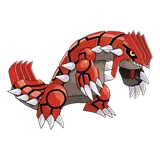 Groudon
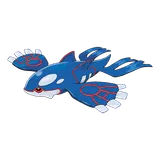 Kyogre
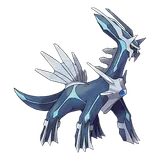 Dialga
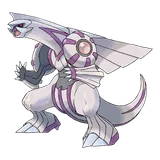 Palkia
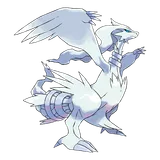 Reshiram
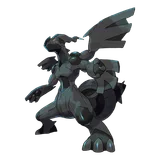 Zekrom
VIIIKalos to AlolaInto 3D
Together
2013–2016
X and Y launched worldwide on the same day, fully in 3D. Pikachu paraded through Yokohama, the originals came back for the 20th birthday, and Sun and Moon set out for islands inspired by Hawaii.
On October 12, 2013, X and Y launched everywhere on the same day. For the first time, the whole world started together.
October 12, 2013The Pokémon Company · Corporate history (2026)
And for the first time in the main series, every Pokémon was fully 3D.
In August 2014, a parade of Pikachu took over the streets of Yokohama.
August 9, 2014The Pokémon Company · Corporate history (2026)
For its 20th birthday, the original games came back, 20 years to the day after Red and Green.
February 27, 2016Serebii.net · Pokémon Red and Blue on the Nintendo 3DS Virtual Console (2016)
That November, Sun and Moon swapped Gyms for island trials, on islands inspired by Hawaii.
November 18, 2016Wikipedia · Pokémon Sun and Moon (2026)
Sources
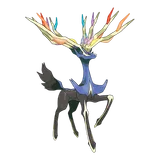 Xerneas
 Yveltal
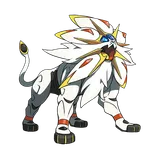 Solgaleo
 Lunala
IXEverywherePokémon GO
Outside
July 2016
An April Fools' joke on Google Maps grew into Pokémon GO. In July 2016 it turned the real world into the map, and people everywhere went outside to look.
It grew out of an April Fools' joke in 2014: Pokémon hidden inside Google Maps.
In their wordsCBC News / The Associated Press · “How Pokémon Go went from prank to phenomenon” (2016)
On July 6, 2016, Pokémon GO turned the real world into the map.
July 6, 2016The Pokémon Company · Corporate history (2026)
Parks filled at midnight. Strangers talked to each other. People walked for miles without noticing.
ReportedWikipedia · Pokémon Go: gameplay and social impact (2026)
Pokémon, right where you'd look for them.
ReportedWikipedia · Pokémon Go: gameplay and social impact (2026)
A year later, thousands gathered in one park, Chicago's Grant Park, to play together.
July 22, 2017Serebii.net · Pokémon GO Fest 2017, Grant Park, Chicago (2017)
Decades after the fields were paved, the creatures were back outside, and everyone went looking.
TIME · “The Ultimate Game Freak”, interview with Satoshi Tajiri (1999)
Sources
- CBC News / The Associated Press · “How Pokémon Go went from prank to phenomenon” (2016)
- The Pokémon Company · Corporate history (2026)
- Wikipedia · Pokémon Go: gameplay and social impact (2026)
- Serebii.net · Pokémon GO Fest 2017, Grant Park, Chicago (2017)
- TIME · “The Ultimate Game Freak”, interview with Satoshi Tajiri (1999)
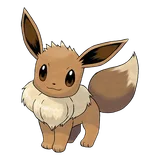 Eevee
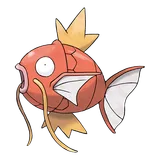 Magikarp
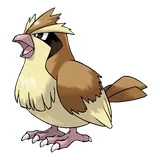 Pidgey
XKanto to LumioseThe Switch era
Open Worlds
2018–2025
Let's Go's return to Kanto, Galar's stadiums, Hisui's distant past, Paldea's open world, Ash's championship and farewell, and a whole adventure inside Lumiose City.
Let's Go brought players back to Kanto, with Pikachu and Eevee walking beside them.
November 16, 2018The Pokémon Company · Corporate history (2026)
Sword and Shield brought a new generation to the Switch, with stadiums full of cheering crowds.
November 15, 2019The Pokémon Company · Corporate history (2026)
On its 25th anniversary, the franchise looked back in time, to Sinnoh's distant past.
February 27, 2021Wikipedia · Pokémon Legends: Arceus, revealed at the 25th-anniversary Pokémon Presents (2026)
Legends: Arceus returned to an ancient, wild land, before the first Pokédex was written.
January 28, 2022The Pokémon Company · Corporate history (2026)
Scarlet and Violet opened the whole map: go anywhere, in any order.
November 18, 2022The Pokémon Company · Corporate history (2026)
After 25 years, Ash and Pikachu finally became World Champions.
November 11, 2022Wikipedia (Japanese) · ポケットモンスター (2019年のアニメ) (2026)
Then they said goodbye. Three weeks later, a new journey began with new heroes.
March 24, 2023April 14, 2023Wikipedia (Japanese) · ポケットモンスター (2019年のアニメ) (2026)
And in 2025, Legends: Z-A turned an entire city, Lumiose, into the adventure.
October 16, 2025The Pokémon Company · Corporate history (2026)
Sources
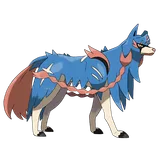 Zacian
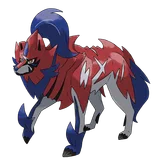 Zamazenta
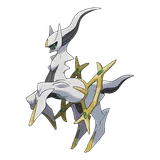 Arceus
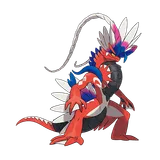 Koraidon
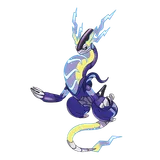 Miraidon
XIEverywhereToday
Thirty Years
February 27, 2026
Thirty years to the day after Red and Green, the next generation was announced. It started with two Game Boys and a cable; now there are more than a thousand Pokémon.
Thirty years to the day after Red and Green, the next generation was announced: Pokémon Winds and Pokémon Waves, for 2027.
February 27, 2026Wikipedia · Pokémon Winds and Waves (announced at Pokémon Presents, February 27, 2026) (2026)
It started with two Game Boys and a cable.
TIME · “The Ultimate Game Freak”, interview with Satoshi Tajiri (1999)
Now it's games, cards, shows and films, and generations of players who grew up together without ever meeting.
More than a thousand Pokémon. Every one of them somebody's favourite.
It all came from one feeling: the one you get when you turn over a stone and something's there. Go find yours.
TIME · “The Ultimate Game Freak”, interview with Satoshi Tajiri (1999)